
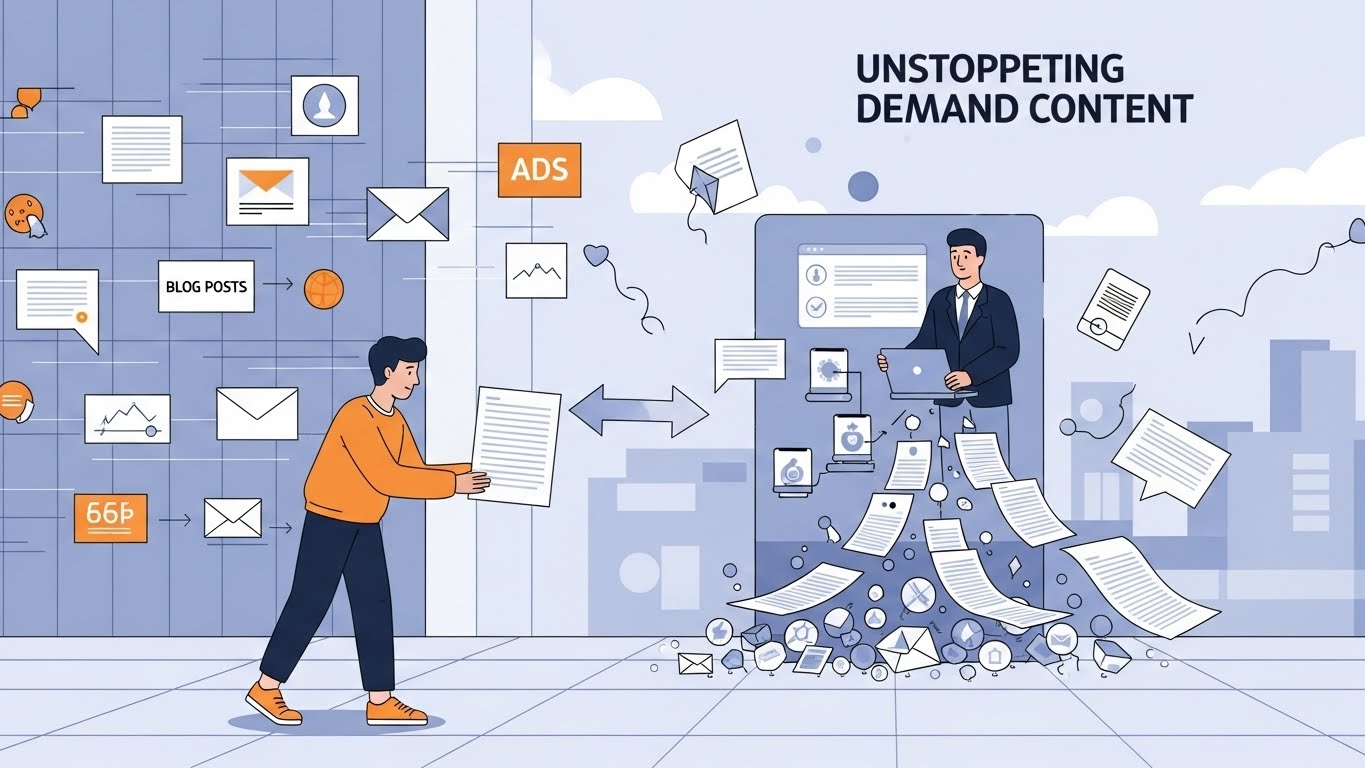
The landscape of copywriting content has undergone a seismic shift in recent years, one that’s both exhilarating and, for some, a little daunting. As a writer who’s spent years crafting narratives, selling products, and building brands with words, I’ve watched this evolution with a keen, albeit sometimes skeptical, eye. What started as whispers about “robot writers” has blossomed into a full-blown technological revolution, bringing sophisticated AI tools for copywriting content into the everyday workflow of marketing teams, agencies, and even individual freelancers.
Gone are the days when the idea of a machine generating compelling text felt like pure science fiction. Today, we’re living that reality, and it’s far more nuanced and fascinating than a simple “humans vs. machines” narrative. From overcoming writer’s block to scaling personalized campaigns, these tools are fundamentally changing how we approach content creation. But what exactly are these tools, how do they work, and what does their rise truly mean for the future of professional writing? That’s what we’ll explore in depth, drawing from hands-on experience, observation, and a healthy dose of realistic perspective.
The Unstoppable Demand: Why AI Found Its Foothold in Copywriting
To truly understand the prominence of AI copywriting tools, we first need to grasp the immense pressure points they address in modern marketing and content strategy. It wasn’t merely a technological whim; it was a response to an insatiable appetite for content and an ever-accelerating business pace.
The Content Deluge and the Need for Speed
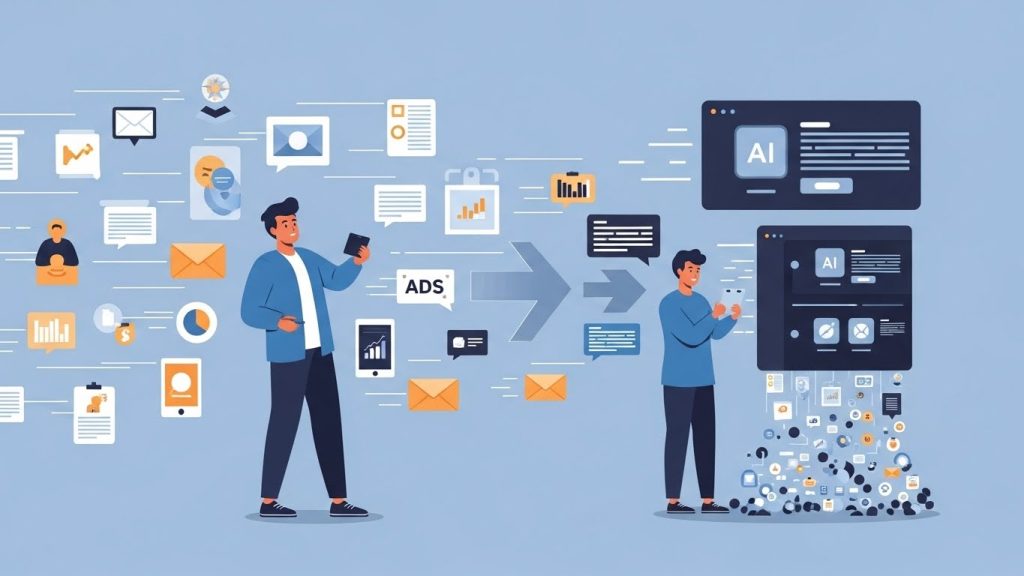
Think about it: every brand, every individual, every service seems to need a constant stream of fresh content. Blog posts, social media updates across multiple platforms, email newsletters, ad copy variations, product descriptions, landing page text, video scripts – the list is endless. The sheer volume required to maintain visibility and engage audiences in today’s digital ecosystem is staggering. Traditional copywriting, while invaluable for its depth and originality, often can’t keep up with this demand for quantity and speed without significant resource allocation.
I’ve seen marketing departments struggle to produce enough unique ad variations for A/B testing, or small businesses fall behind on their content calendars because writing everything from scratch is simply too time-consuming. This is where the allure of AI content copywriting becomes undeniable. It promises to alleviate some of that pressure, turning weeks of manual drafting into mere hours and allowing teams to amplify their output without necessarily increasing their headcount.
Personalization at Scale: A Marketer’s Dream
Another critical driver is the move towards hyper-personalization. Customers today expect experiences tailored specifically to them. Generic messaging no longer cuts through the noise. But personalizing content for thousands, even millions, of individual customers is a logistical nightmare for human writers. Imagine crafting a unique email subject line, body copy, and call to action for every segment of your audience, tailored to their browsing history, past purchases, and expressed preferences. It’s virtually impossible to do manually.
AI for copywriting content offers a powerful solution. By analyzing vast datasets of customer behavior and leveraging algorithms to uncover patterns, these tools can generate highly targeted, personalized messages at scale. This ability to speak directly to an individual’s needs and interests, even if the core message remains the same, is a game-changer for conversion rates and customer loyalty. It’s about being relevant, everywhere, all the time – something that was once an aspiration, now made achievable through intelligent automation.
Unpacking the Technology: How AI Copywriting Tools Actually Work
Before diving into specific tools, let’s pull back the curtain a bit on the “magic” behind them. At its core, AI copywriting content tools leverage sophisticated algorithms built upon what we broadly call Artificial Intelligence, specifically drawing heavily from Natural Language Processing (NLP) and Machine Learning (ML). These aren’t sentient beings with opinions; they are complex pattern-recognition systems trained on enormous datasets of human-generated text.
When you interact with one of these tools, whether it’s for generating a headline or a full paragraph, you’re essentially asking it to predict the most probable sequence of words that fits your input and desired output style, based on everything it has learned.
- Natural Language Processing (NLP): This is the branch of AI that allows computers to understand, interpret, and generate human language. It’s how these tools can make sense of your prompts and produce coherent, grammatically correct, and contextually relevant text.
- Large Language Models (LLMs): Many modern AI tools for copywriting content are powered by incredibly vast LLMs. These models, like GPT-3, GPT-4, and others, have been trained on trillions of words from the internet – books, articles, websites, conversations – learning the nuances of grammar, syntax, style, tone, and even facts. They learn statistical relationships between words and phrases, allowing them to generate text that sounds remarkably human.
- Machine Learning (ML): This is the process by which AI learns and improves over time without being explicitly programmed for every task. As it processes more text and receives feedback (often implicitly, through usage patterns), its ability to generate better, more relevant, and more creative copy enhances.
When you provide a prompt – say, “write a catchy Instagram caption for a new coffee shop opening” – the AI doesn’t understand coffee in the human sense. Instead, it analyzes your words, compares them to millions of Instagram captions and coffee shop marketing materials it has processed, identifies common themes, tones, and structures, and then generates text that statistically fits those patterns. It’s an incredibly powerful form of statistical prediction, often yielding surprisingly creative and effective results.
The Arsenal: Key Categories of AI Copywriting Tools
The market for AI copywriting tools is dynamic and rapidly expanding. While specific products come and go, or evolve, their functionalities generally fall into distinct categories designed to address different stages of the content creation process.
Idea Generation and Brainstorming Tools
Every writer knows the dreaded blank page. AI tools for copywriting content can be a fantastic antidote to writer’s block. These tools excel at generating a wide range of ideas quickly.
- Headline Generators: Input a topic or keyword, and the AI will spit out dozens of potential headlines, varying in style (e.g., listicle, question, benefit-driven). This saves immense time in A/B testing and finding that perfect hook.
- Topic and Outline Generators: Struggling to come up with blog post topics or an outline for an article? These tools can suggest relevant topics based on keywords and user intent, and then build a logical structure for your content, complete with potential subheadings.
- Marketing Angle Brainstormers: Need a fresh angle for a product launch? Describe your product and target audience, and the AI can suggest different benefits to highlight, pain points to address, or unique selling propositions to emphasize.
I’ve personally used these extensively when I’m feeling stuck or need to quickly explore many different directions before committing. It’s like having an army of junior copywriters constantly spitting out ideas, and my job is to curate and refine the best ones.

Content Generation and Drafting Tools
This is often what people think of first when they hear “AI copywriting.” These tools can generate actual text, from short snippets to longer-form drafts.
- Short-Form Ad Copy: Perhaps one of the most popular uses, these tools can generate multiple variations of ad copy for platforms like Google Ads, Facebook Ads, and LinkedIn, helping marketers quickly test different messages and calls to action.
- Social Media Posts: From witty tweets to engaging Instagram captions or detailed LinkedIn updates, AI can produce copy tailored for specific platforms and character limits.
- Product Descriptions: For e-commerce businesses, generating unique, SEO-friendly, and persuasive descriptions for hundreds or thousands of products is a monumental task. AI can automate this, ensuring consistency and accuracy.
- Email Snippets and Sequences: Crafting engaging email subject lines, body paragraphs, or entire email sequences for onboarding, promotions, or abandoned carts can be streamlined with AI.
- Blog Post Intros, Outros, and Paragraph Rewrites: While often not ready for publication verbatim, these tools can provide a solid first draft or help rephrase existing text, saving significant time in the drafting phase.
The key here is speed and volume. It’s not about replacing the human writer, but empowering them to produce significantly more content, faster, and often with surprising quality for initial drafts.
Optimization and Enhancement Tools
Generating content is one thing; optimizing it for performance is another. AI content copywriting isn’t just about creation; it’s also about refinement.
- SEO Keyword Integration: These tools can analyze your content and suggest relevant keywords to include, or even rewrite sentences to naturally integrate target keywords, improving search engine visibility.
- Readability Checkers: AI-powered tools can assess the readability of your content (e.g., Flesch-Kincaid grade level) and suggest ways to simplify complex sentences, reduce jargon, or improve flow for your target audience.
- Tone Analysis and Adjustment: Need your copy to sound more empathetic, authoritative, playful, or formal? AI can analyze the tone of your text and suggest modifications to align with your desired brand voice.
- Grammar, Style, and Punctuation Correctors: Beyond basic spell check, these advanced tools can identify complex grammatical errors, suggest stylistic improvements, and even rephrase sentences for greater impact and clarity.
These enhancement tools are invaluable for ensuring that the content not only gets created but also performs well, resonates with the audience, and maintains a high level of polish.
Repurposing and Summarization Tools
In a world where content needs to live across many platforms, repurposing is key. AI for copywriting content excels at transforming existing material into new formats.
- Content Repurposing: Take a long-form blog post, and AI can help you generate social media updates, email snippets, video script outlines, or even infographic text from its key points. This maximizes the value of every piece of content.
- Summarization: Need a quick summary of a lengthy report, article, or meeting transcript? AI can distill core information into concise, readable summaries, saving busy professionals time.
This category highlights AI’s strength in extracting and transforming information, enabling marketers to stretch their content investments further.
Real-World Impact: Where AI Tools Shine in Copywriting
To truly grasp the power of AI tools for copywriting content, it’s essential to look at how they’re being applied in the trenches of marketing and content creation today. These aren’t futuristic concepts; they’re daily realities for many businesses.
Case Study 1: E-commerce Product Descriptions for an Online Retailer
Consider an online fashion retailer launching a new collection with hundreds of items. Each product needs a unique, engaging description that highlights features and benefits and includes relevant keywords for SEO. Manually, this would be a monumental task, often resulting in generic or rushed descriptions due to sheer volume.
- Before AI: A team of two copywriters might spend weeks on this project, leading to burnout, inconsistency in tone, and potentially missed SEO opportunities due to time constraints.
- With AI, the copywriters use an AI copywriting tool by feeding it product attributes (material, color, style, target demographic) and a few examples of the desired tone. The AI generates first drafts for hundreds of descriptions within hours. The human copywriters then act as editors, refining the AI’s output, ensuring brand voice consistency, adding creative flair, and performing final SEO checks. The result: faster launch times, consistent quality, higher search visibility, and more engaged product pages.
This scenario, which I’ve seen play out multiple times, perfectly illustrates how AI augments, rather than replaces, human effort. It tackles the drudgery, freeing up human creativity for refinement and strategic oversight.
Case Study 2: Scaling Social Media Content for a Digital Agency
A digital marketing agency manages social media for a diverse portfolio of clients across various industries – from local cafes to tech startups. Each client requires unique content, daily posts, and engagement.
- Before AI: The agency’s social media managers spend significant time brainstorming ideas, writing captions, and sourcing hashtags, often struggling to maintain fresh perspectives across numerous clients.
- With AI, the agency integrates AI tools into its copywriting workflow. For a client launching a new product, the AI generates a week’s worth of diverse post ideas and captions, tailored to Instagram, Twitter, and LinkedIn, based on the product’s features and target audience. For another client, it helps brainstorm trending topics and suggests engaging questions for audience interaction. The social media managers then personalize these drafts, add brand-specific emojis, select compelling visuals, and schedule posts. This allows them to manage more clients effectively, increase posting frequency, and deliver more tailored content, ultimately enhancing client satisfaction and agency profitability.
From small businesses to enterprise-level marketing teams, AI-generated content copywriting is proving indispensable for maintaining a dynamic, pervasive online presence.
Case Study 3: Overcoming Writer’s Block and Generating Blog Outlines for a Content Marketing Team
A corporate content marketing team is tasked with producing several long-form blog posts each month to establish thought leadership and drive organic traffic. Writer’s block and the time spent on initial research and outlining are frequent bottlenecks.
- Before AI: Writers often spend days researching a topic, outlining, and struggling with an engaging introduction. If they hit a creative wall, the entire content schedule can be delayed.
- With AI: When a writer is assigned a new topic, such as “The Future of Sustainable Packaging,” they enter it into an AI-poweredcopywriting tool. The AI quickly generates a comprehensive outline, including potential subheadings, key questions to address, and even a few bullet points under each section. It also provides several intro paragraphs with different angles. The human writer now has a strong starting point, can select the best outline elements, combine intro ideas, and immediately dive into drafting the detailed content, focusing their mental energy on research, unique insights, and persuasive arguments rather than structure and initial phrasing. This significantly reduces the time from concept to first draft, improving overall team efficiency and content volume.
These examples highlight a critical truth: these tools are not about replacing human ingenuity but about extending its reach, accelerating its output, and freeing up creative energy for higher-order tasks.
The Human Element: Where AI Falters and Why We Still Need Copywriters
While the allure of AI tools for copywriting content is undeniable, it’s vital to acknowledge their limitations. This isn’t a battle where one emerges victorious; it’s a partnership where each brings unique strengths to the table. The very areas where AI falls short are precisely where human copywriters remain irreplaceable.
The Nuance of Human Empathy and Emotional Resonance
AI can simulate emotions based on patterns, but it doesn’t feel them. It cannot genuinely empathize with a reader’s pain, joy, or aspiration in the way a human writer can. A truly poignant story, a deeply resonant message that taps into shared human experiences, or content that requires a profound understanding of social complexities often falls flat when solely generated by AI.
I’ve reviewed AI-generated copy that, while grammatically perfect, felt sterile or even tone-deaf. It lacked the genuine warmth, wit, or vulnerability that distinguishes truly compelling communication. Crafting narratives that build trust, inspire action through emotional connection, or offer comfort in times of crisis requires a human heart and mind.
Maintaining a Unique Brand Voice and Identity
Every successful brand has a distinct voice – a unique personality that shines through all its communications. This voice is built on values, culture, and a deep understanding of its audience and mission. While AI copywriting tools can be trained on a brand’s existing voice to some extent, they struggle to deliver genuine innovation or maintain that voice without constant human input and refinement.
AI tends to generalize; it leans on what’s statistically probable, not what’s uniquely characteristic of your brand. It won’t spontaneously invent a new slang term that perfectly encapsulates your brand’s rebellious spirit, or weave in a subtle, recurring inside joke that only your loyal customers understand. The nuances of brand personality, the subtle shifts in tone for different campaigns, and the consistent embodiment of a brand’s unique character still demand human oversight and creative direction.
Ethical Considerations and Fact-Checking
One of the most significant pitfalls of relying solely on AI content copywriting is the potential for misinformation and ethical lapses. AI models trained on the internet can inadvertently propagate biases present in their training data. They can also “hallucinate” facts – generating plausible-sounding information that is entirely incorrect – because they prioritize coherence and grammatical correctness over factual accuracy.
As an expert, I constantly stress the critical need for human fact-checking and ethical review. Legal disclaimers, sensitive medical advice, financial guidance, or any content requiring absolute factual precision must be scrutinized by a human. The responsibility for the accuracy and ethical implications of published content ultimately rests with the humans behind the AI, not the AI itself.
The Shift in the Copywriter’s Role
Instead of being replaced, the copywriter’s role is evolving. We are becoming:
- Editors and Refiners: Polishing AI-generated drafts, injecting human nuance, and ensuring brand voice.
- Strategists: Guiding the AI by providing clear prompts, defining goals, and overseeing the bigger content picture.
- Prompt Engineers (informally): Learning the art of asking the right questions to get the best output from AI.
- Quality Controllers: Fact-checking, ensuring ethical considerations are met, and maintaining overall content excellence.
- Creative Innovators: Focusing on groundbreaking ideas, deep storytelling, and campaigns that AI cannot yet conceive.
The relationship is symbiotic. AI handles the heavy lifting of drafting and optimization, freeing the human writer to focus on strategy, creativity, and the intangible elements that truly differentiate compelling copy.
Best Practices for Integrating AI into Your Copywriting Workflow
Given the powerful capabilities and inherent limitations of AI tools for copywriting content, integrating them effectively requires a thoughtful approach. Here’s how I advise my colleagues and clients to make the most of this technology:
AI as a Co-Pilot, Not an Auto-Pilot
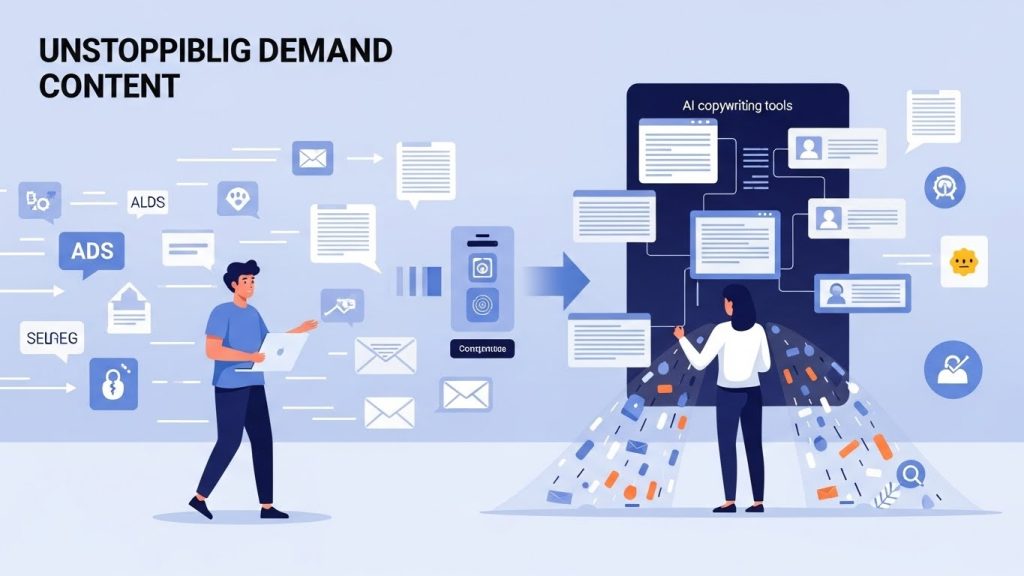
This is the golden rule. Think of AI as your highly efficient, incredibly knowledgeable assistant, not as a replacement for your own brain. It can handle repetitive tasks, generate ideas, and provide initial drafts, but the final strategy, the unique creative spark, and the ultimate responsibility for the message remain yours. Never publish AI-generated content without thorough human review and editing. Treat it as a starting point, not an endpoint.
Mastering the Art of Prompt Engineering (Without Calling it That)
The quality of the AI’s output is directly proportional to the quality of your input. Learning to “talk” to these tools effectively is a skill in itself.
- Be Specific: Instead of “write an ad,” try “write three short, benefit-driven Facebook ad headlines for a premium, organic coffee blend targeted at busy professionals who value sustainability, aiming for a sophisticated yet approachable tone. Include a call to action for a 10% discount.”
- Provide Context: Give the AI as much background information as possible: target audience, brand voice guidelines, key selling points, desired tone, format, length, and even competitor examples.
- Iterate and Refine: If the first output isn’t perfect, don’t give up. Provide feedback (“make it more concise,” “use stronger verbs,” “add more humor,” “focus on X benefit”) and let the AI try again.
- Give Examples: “Write something in the style of [Brand X]” or “Use a similar tone to this article…” can effectively guide the AI.
Effective “prompting” (or simply, clear instruction) is perhaps the most critical skill for anyone working with AI tools for copywriting content today.
The Critical Role of Human Oversight and Editing
This cannot be stressed enough. Every piece of content generated by AI needs a human editor’s touch.
- Fact-Check Everything: Always verify any claims, statistics, or factual statements generated by the AI.
- Ensure Brand Voice Consistency: Does it sound like your brand? Is the tone correct? Are there any awkward phrases or industry jargon that don’t fit?
- Inject Human Flair: Add anecdotes, personal touches, metaphors, or unique turns of phrase that only a human can conjure.
- Check for Readability and Flow: AI sometimes produces grammatically correct text that lacks natural flow or rhythm.
- Optimize for SEO and Conversions: While AI can help, a human expert still needs to ensure keywords are naturally integrated and that calls to action are compelling and clear.
- Ethical and Legal Review: Confirm the content is not biased, discriminatory, or legally problematic.
By following these best practices, you transform AI content copywriting from a potential risk into a powerful accelerator for your content strategy.
The Future of Copywriting: A Symbiotic Relationship
Looking ahead, the evolution of AI for copywriting content suggests not a displacement, but a profound transformation of the writing profession. The future isn’t about AI or humans; it’s about AI and humans, working in concert.
As AI models become even more sophisticated, they will undoubtedly handle an increasing volume of repetitive, data-driven content generation tasks. This means copywriters will be further liberated from the mundane, allowing them to ascend to higher-value activities. We will see an even greater emphasis on:
- Strategic Thinking: Copywriters will become more like content strategists, guiding AI to produce content that aligns with overarching business goals, brand narratives, and customer journeys.
- Deep Storytelling: The demand for authentic, emotionally resonant stories that differentiate brands and build lasting connections will only intensify. This is an inherently human domain.
- Creative Innovation: Brainstorming truly novel campaign ideas, crafting disruptive messaging, and exploring uncharted creative territories will be the hallmarks of human copywriters.
- Ethical Guardianship: As AI becomes more pervasive, the human role in ensuring ethical content creation, mitigating bias, and upholding responsible communication will be paramount.
- Relationship Building: Copywriting, at its heart, is about building relationships through words. While AI can automate parts of this, the genuine connection requires a human touch.
The tools will improve, becoming more intuitive, more adaptable, and more capable of understanding complex nuances. But the human element—our capacity for empathy, genuine creativity, critical judgment, and strategic insight—will remain the indispensable ingredient that turns mere words into impactful, meaningful communication. The copywriter of tomorrow won’t just be a writer; they’ll be an editor, a strategist, a data interpreter, and ultimately, a custodian of the human voice in an increasingly automated world.
Conclusion: Embracing the Augmented Future
The integration of AI tools into our copywriting workflows isn’t a threat to human creativity, but rather an evolution of it. These powerful applications offer unprecedented opportunities for efficiency, scalability, and personalization, empowering marketing teams and writers to achieve more than ever before. They handle the heavy lifting, the repetitive tasks, and the initial drafting, freeing up valuable time and mental energy.
However, the essence of truly impactful copywriting – the ability to connect, persuade, and inspire with authentic emotion, nuanced understanding, and original thought – remains firmly in the hands of the human writer. The best outcomes arise from a partnership: AI providing the speed and raw material, and the human copywriter providing the strategic direction, the creative spark, the ethical oversight, and the irreplaceable human touch.
As someone who’s lived and breathed words for years, I firmly believe that the future of copywriting is not one where machines write for us, but where they write with us. It’s an exciting, dynamic era for content creation, where the skilled human copywriter, armed with powerful AI allies, is more valuable and strategically important than ever before. Embrace these tools, learn to wield them effectively, and prepare to elevate your craft to new heights.